
Feature Articles
Have a topic request or want to submit an article? Contact the MAGNIFYI Editors
Equipment Vendors Lead in Virtual Power Plants While States Set Market Rules
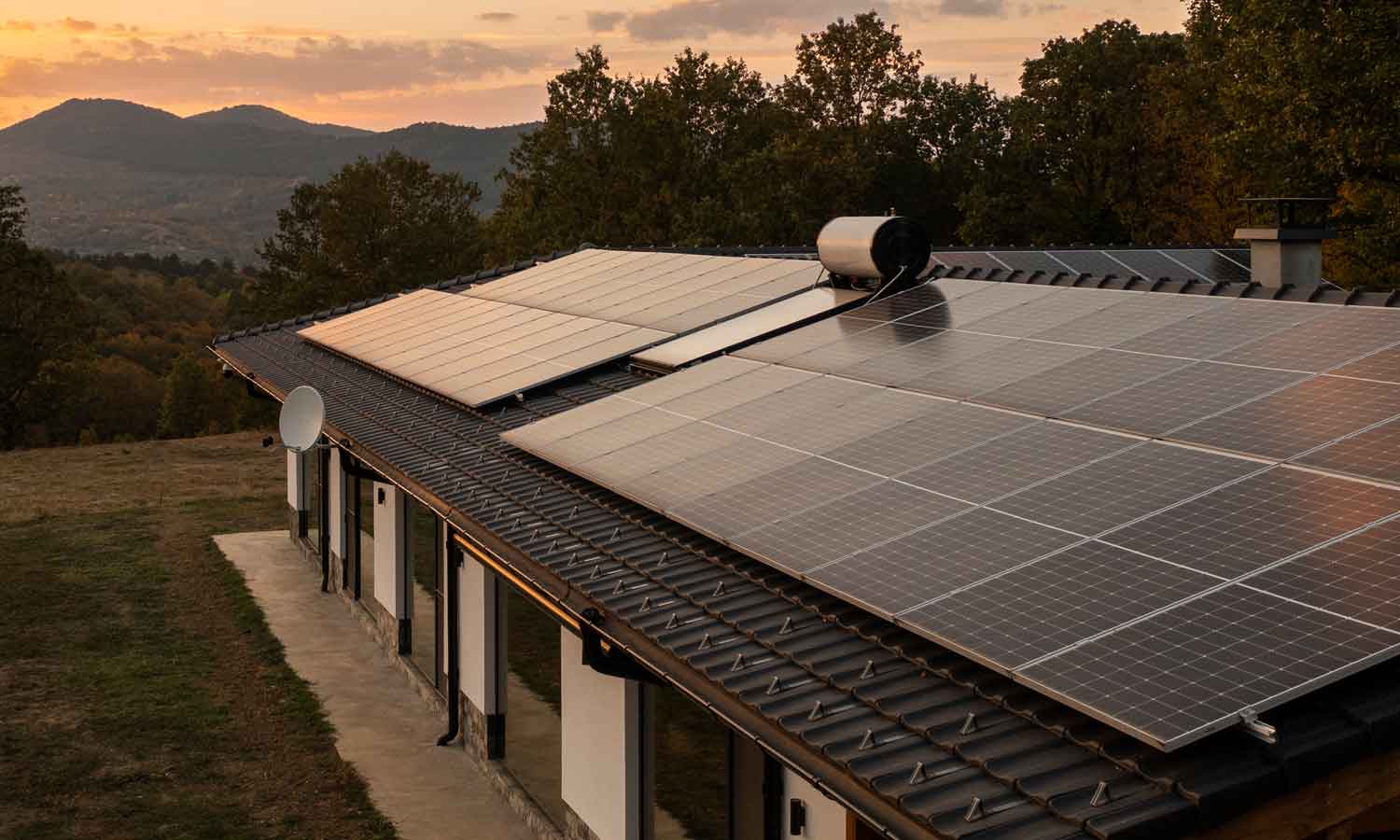
Equipment vendors are racing to add customers to virtual power plants (VPPs) while efforts to create the networks within regulatory boundaries proceed comparatively slowly at the state level.
Vendors, which often sell solar panels along with batteries and inverters, may offer services on their own to help customers cut electricity costs, or team up with utilities or retail energy providers.
Regulators in northeast states, facing a political storm because of high bills as large loads hook up and natural gas prices rise, embrace VPPs as part of a menu of distributed energy resources that can respond to demand surges.
Many of those states have Democrat governors and legislatures that want to co-optimize the reduction of consumer prices and greenhouse gas emissions while creating a zero-emission electricity sector with more demand-side resources.
Carrier, best known for heating, ventilation and air conditioning systems, launched a program last year in New York, California and Texas called SmartSave, which “occasionally” adjusts a thermostat up to 4 degrees.
The program has real-time energy savings tracking and automated controls, allowing homeowners to participate in grid events for rewards. A grid event is considered the time of peak energy use.
Carrier manufactures inverter-based heat pumps and air conditioners that should make the temperature adjustments more efficient, and some of its products incorporate storage batteries.
Carrier also said customers “can only be enrolled in one demand response or virtual power plant program at a time” and that a similar utility company energy savings program disqualifies consumers from SmartSave.
Inverter and battery company Growatt said this month, without offering details, that it will now offer VPP services that earn its customers “additional money” directly through local utility programs.
Solar and battery company Sunrun announced in December a partnership with retail energy provider Reliant pairing the company’s solar-plus-storage systems with optimized rate plans in ERCOT.
Distributed energy resources began to get more attention with the passage of Order 2222 by the Federal Energy Regulatory Commission in 2020. The order mandates that aggregators of these resources be allowed to participate in all regional organized wholesale energy markets.
The impact of the order slowly is being felt at the state level.
The Pennsylvania Public Utility Commission published on April 11 a notice of proposed rulemaking seeking comment on the distributed energy resource plans to be required of electricity distributors.
The notice said aggregation of distributed energy resources “requires specific technical requirements and review not currently in our regulations,” which suggests that a new market could develop. A distributed energy resource in the state is defined as capable of satisfying a minimum energy or ancillary services market offer of 100 kW.
The commission is likely to create requirements that apply to resource operators and aggregators and energy distributors that participated in the energy, capacity or ancillary services markets of the PJM Interconnection.
Multiple stakeholders recommend establishing a state-level licensing or registration process for aggregators similar to that used for retail energy providers. The notice also said that distributors generally advocate for strict separation between retail and wholesale market participation.
A state task force on distributed energy resources said in 2024 that in the distinction between VPPs and non-wires solutions is “particularly instructive for cost allocation,” including how electricity distributors should distinguish between grid modernization, general costs and aggregator-specific costs.
Cost allocation is one of many issues to be decided at the Maryland Public Service Commission, which is evaluating distributor pilot plans to comply with the Distributed Renewable Integration and Vehicle Electrification (DRIVE) Act, adopted in 2024.
Distributor BGE has asked the commission to authorize recovery of prudently incurred VPP costs through a regulatory asset, with a return at the commission-authorized weighted average cost of capital. The commission staff and the state Office of the Peoples Counsel recommended that the request be denied.
Investor-owned utilities were required to file temporary tariffs to implement time-of-use rates and pilots for VPPs and vehicle-to-grid programs that provide “reasonable compensation on a pay-for-performance basis.” Upon reviewing utility responses, the commission staff expressed a preference for more refinement and information.
Filings in the Maryland docket reveal future opportunities in the retail energy space.
The Vehicle-Grid Integration Council, a national trade group, said that if electric vehicles are treated as grid resources, the commission should ensure that DRIVE Act programs allow for them to be integrated into VPPs.
CPower Energy, a demand-side energy management company, noted that each Maryland utility introduced VPP pilots for commercial and industrial customers that include reasonable requirements and performance compensation.
CPower’s filing said that utilities within Pepco Holdings utilities expect to enroll nearly 4,000 commercial customers into the bring your own device thermostat offering in a DRIVE Act VPP pilot.
The time-of-use rate proposals are a focus of Maryland commission staff. Tesla said it is important the commission recognize that time-varying rates help control general load shape, whereas “called” VPP events target acute grid needs.
“Both passive incentivization of residential energy use management and active incentivization of grid support should be pursued but not conflated,” the auto and battery maker said. “Treating the different elements of a VPP under the same regulatory viewpoint and market frameworks risks undervaluing the contributions of exporting resources.”
VPPs can participate in markets of the New York ISO through the aggregation model along with other distributed resources.
Sunrun has a VPP pilot program in the territory of utility Orange & Rockland that reportedly includes 350 households with batteries.
The staff of the state department of public service has until June 30 to produce a plan for Gov. Kathy Hochul’s (D) “grid of the future,” which will include more VPP proposals.
A bill introduced in the state assembly in February that would require the state’s major electric utilities to create VPPs has seen no action.
In Virginia, a PJM state without a retail market, Governor Abigail Spanberger signed a law in March that authorizes electric cooperatives to establish and implement VPPs.
Small numbers of commercial electricity customers can choose their supplier in Michigan, where state regulators are nudging utility Consumers Energy into providing VPPs.
The state public service commission said in an order last month that given “the fact that VPPs can provide a multitude of grid benefits, increase system reliability, and avoid or defer costly capital investments, future proposed investments [by Consumers] that fail to account for VPPs may be disallowed.”
In Minnesota, Xcel Energy has authorization to install up to 400MW of battery energy storage systems in increments of 1MW to 3MW as part of its Capacity*Connect VPP.
Virtual power plants are at the study stage in Arizona and California.
A left-leaning think tank called the Open Markets Institute said in a December study that investor-owned utilities are impeding the growth of VPPs “through assorted illicit means.” Antitrust law is a powerful instrument for preventing and deterring utility misconduct, the group concluded.
Editor’s Picks

