
Feature Articles
Have a topic request or want to submit an article? Contact the MAGNIFYI Editors
Reassigned Numbers: One Disconnected Phone Number Can Turn Into a TCPA Lawsuit
That may sound dramatic, but it is increasingly becoming a reality for organizations that rely on outbound calling, text messaging, lead generation, customer service outreach, collections, renewals, and marketing campaigns.
The challenge isn’t that companies lack consent. In many cases, they have valid consent records, documented customer relationships, and well-established outreach programs.
The problem is that phone numbers change hands.
A consumer disconnects a wireless number. The carrier reassigns that number to a new subscriber. Your CRM still reflects the original consumer’s consent. Your dialing platform still sees a valid record. Outreach continues, just not to the person who originally provided permission.
That is where the risk begins.
Why Reassigned Numbers Matter
Reassigned number, “Wrong Party” litigation continues to be an active area of TCPA enforcement and class action activity. For Retail Energy suppliers and other organizations that communicate with consumers the exposure can be significant.
The issue is simple: consent belongs to the consumer, not the telephone number.
When ownership of a phone number changes, the prior consent associated with that number is no longer valid. Without processes in place to identify reassigned numbers, organizations may unknowingly contact a completely different individual.
In today’s litigation environment, “we didn’t know” is not a risk management strategy.
The FCC’s Reassigned Numbers Database
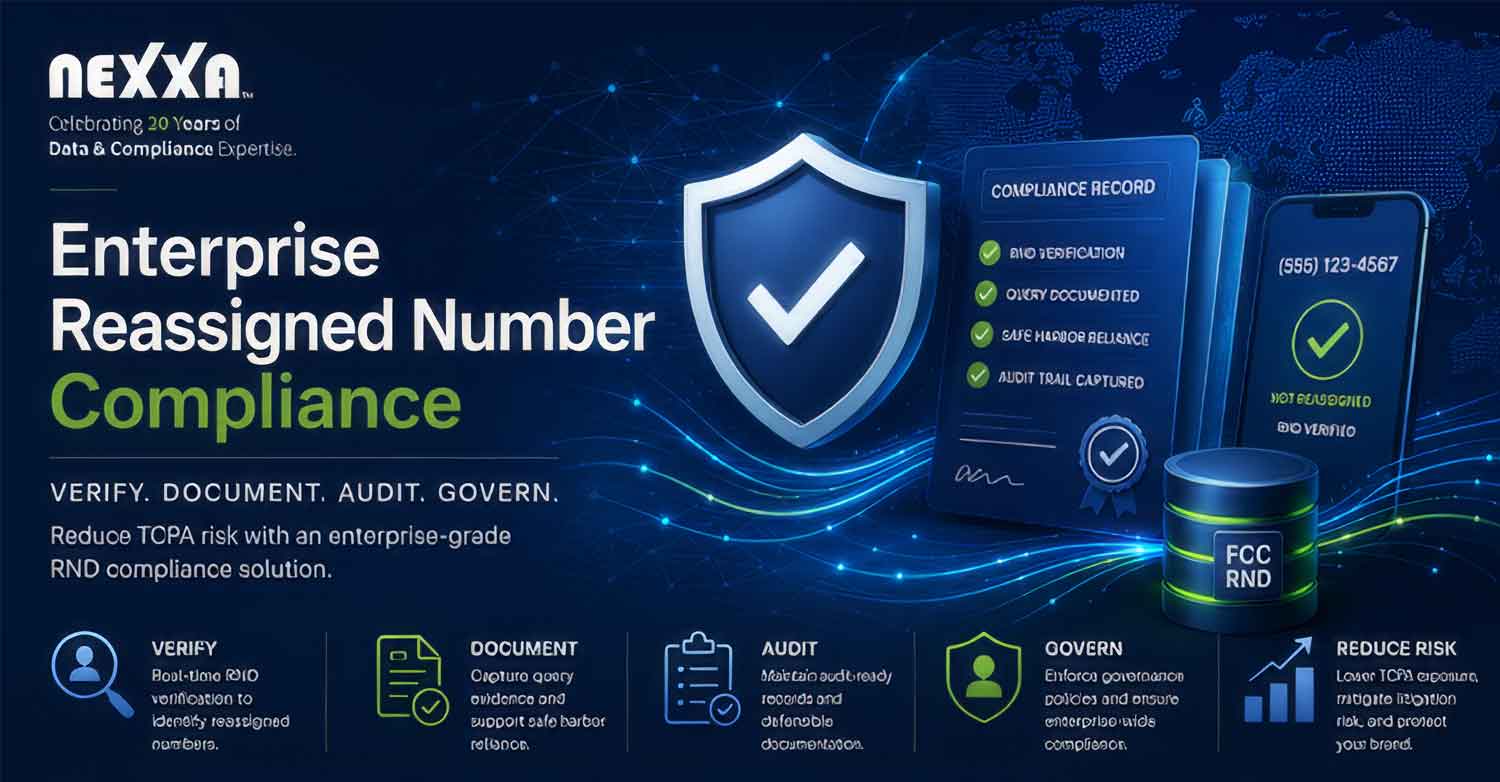
Recognizing the challenge businesses face, the FCC established the Reassigned Numbers Database (RND) to help organizations determine whether a wireless number has been permanently disconnected and potentially reassigned. The database allows businesses to compare telephone numbers since the consent date against carrier reported disconnect data before outreach occurs. More importantly, the FCC established a safe harbor framework for organizations that properly utilize the database and rely on the results.
For compliance leaders, legal teams, and executive management, this provides an opportunity to proactively reduce risk rather than react after litigation occurs.
How the RND Should Be Used
One of the most common misconceptions is that the RND is simply a list-scrubbing tool. In reality, it should be incorporated into a broader data governance and outreach strategy.
Batch Processing
Organizations with large customer databases, lead inventories, and historical marketing records should routinely process their files through the RND.
Batch processing allows companies to:
- Review existing customer databases
- Evaluate legacy lead inventories
- Screen marketing lists before campaign deployment
- Identify potentially reassigned numbers in bulk
- Reduce exposure from aged records
This approach is particularly valuable when organizations maintain large databases that have accumulated over multiple years or from multiple acquisition sources.
Real-Time API Verification
For organizations operating at scale, API integration provides an even stronger control.
Real-time API access allows reassigned number checks to occur directly within business workflows before outreach is initiated.
Common use cases include:
- Lead acquisition platforms
- Customer enrollment systems
- CRM integrations
- Dialing platforms
- SMS marketing systems
- Customer service environments
- Collections and account management workflows
Rather than waiting for a periodic scrub, the API enables organizations to verify numbers as they enter the customer journey. This helps ensure that decisions are based on current data, not historical assumptions.
Moving Beyond Compliance
Too often, organizations view reassigned number management solely through a compliance lens. In reality it is also an operational efficiency issue.
Every call placed to the wrong consumer represents:
- Wasted agent time
- Reduced campaign performance
- Lower contact rates
- Increased complaint volume
- Brand reputation risk
- Potential litigation exposure
- Call blocking and Labeling by the carriers
Improving contact accuracy creates measurable business value while simultaneously reducing risk.
A Practical Approach to Risk Reduction
At Nexxa, we believe reassigned number management should be embedded into the same operational framework used to manage fraud prevention, identity verification, contact validation, and customer acquisition quality.
Accessing the Reassigned numbers database allows businesses to identify potentially reassigned numbers before outreach occurs.
The goal is simple:
I always say, Use better data. Make better decisions. Reduce unnecessary risk.
Final Takeaway
Reassigned numbers are inevitable.
Litigation doesn’t have to be.
If your organization has not recently reviewed how reassigned numbers are identified, validated, and documented across customer communication channels, now is an appropriate time to do so.
Because in today’s environment, one disconnected phone number is no longer just a bad record.
It may be your next complaint, letter of demand, or lawsuit.
Trending

