
Feature Articles
Have a topic request or want to submit an article? Contact the MAGNIFYI Editors
Gas Producers, Pipelines Build Generation Behind the Meter at Data Centers
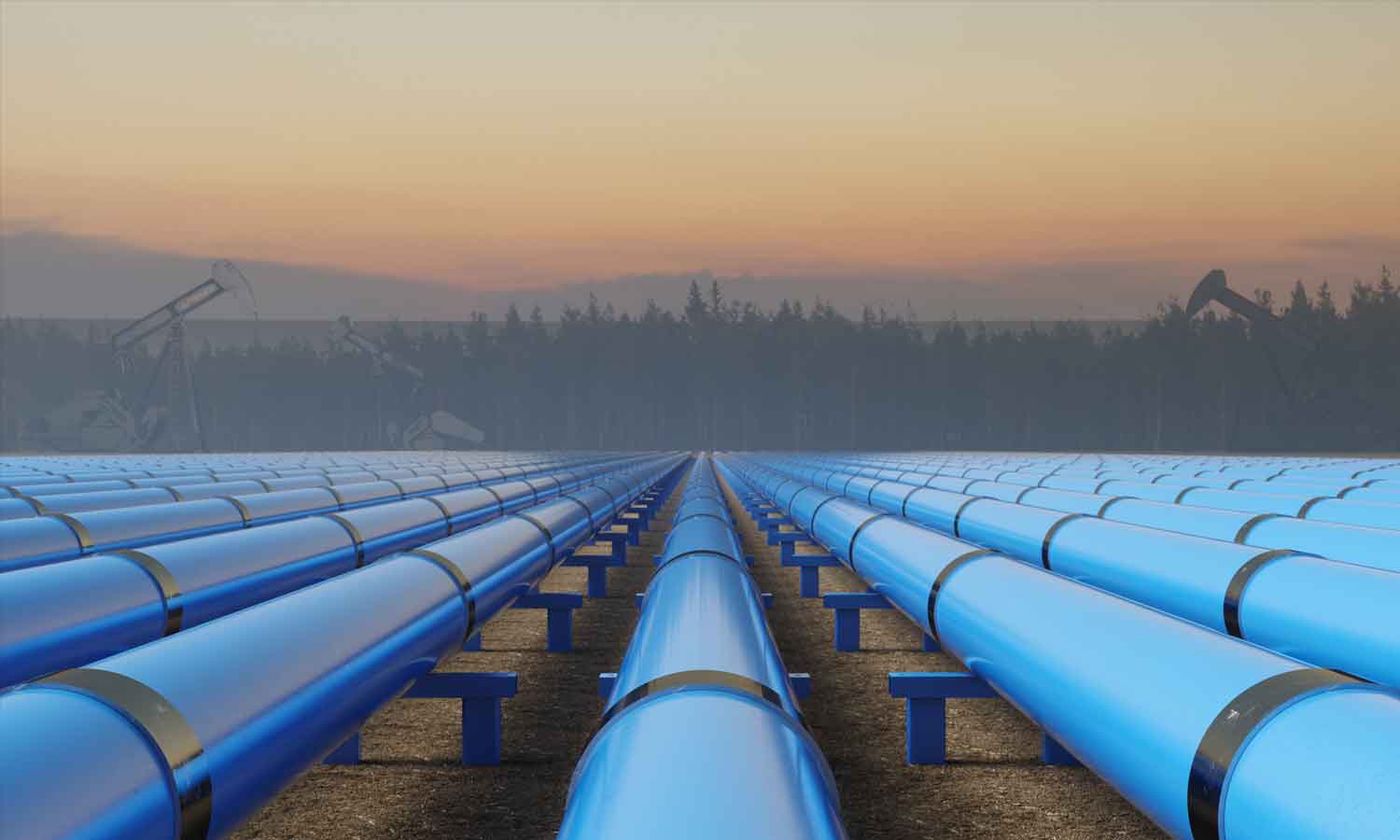
Natural gas pipelines and producers are developing behind-the-meter power generation projects with data centers that could foreclose some opportunities in this growing nascent market to other participants.
Asset-heavy companies in the northeast and Texas can control so much of the energy supply chain that they can skip the approval queues of central grid operators and may not need marketers or retail energy providers.
Many data centers are in or near areas where natural gas is produced. Consultant ICF said gas output growth is led by the Permian Basin of west Texas and southeast New Mexico, followed by the Haynesville Shale of northeast Texas and northwest Louisiana, and the Appalachian basin.
Production trends benefit fuel buyers in the Electric Reliability Council of Texas and PJM Interconnection. Natural gas can move easily to burnertips in Texas and the northeast through an extensive network of inter- and intrastate pipelines.
“The capacity factor and reliability of natural gas generation provide significant value to data centers that is amplified when the generation is located on-site or proximate to the data center,” law firm Sheppard said May 6 in a note to clients.
Producer and pipeline executives emphasized in recent earnings calls how building power plants behind the meter at data centers makes their companies attractive to investors.
More than $7 billion is committed in the power innovations strategy of The Williams Companies to directly serve data centers and large industrial loads and bypass the grid. The company said these are turnkey power solutions backed by long-term contracts intended to deliver gigawatt-scale capacity to meet artificial intelligence (AI) demand.
Williams is pairing gas generation with batteries and load-following controls to respond to fast-changing demand while protecting both on-site systems and the broader grid, CEO Chad Zamarin said.
At least three of the projects are in Ohio and need approval by the state’s power siting board. A project called Socrates in New Albany is scheduled to come on line this year with 556 MW over two phases.
“The tight timeline suggests the pipeline will likely be intrastate,” analysts at consultant East Daley said. “Williams operates the Blue Racer, Cardinal and Flint gathering and processing systems in Ohio, which may serve as origination points for the gas needed to support the project.”
The 490 MW Apollo project in Wood County is expected on line the second half of 2027. Socrates the Younger, a 340 MW project also in New Albany, is expected online in 2028.
A project called NEO includes 682 MW of installed capacity and is targeted to enter service in the second half of 2028 at an undisclosed location.
Zamarin said a broader aim is to “unlock the grid” by partnering with utilities and expanding into the markets where customers want to build. Williams can use its Transcontinental Gas Pipe Line as a backbone, along with natural gas storage, so projects can move swiftly.
“Do not think of us as just a behind-the-meter solution provider,” Zamarin said. “We want to be recognized as an infrastructure solutions provider.”
A note to the first quarter presentation said that Williams’ earnings for 2025 exclude $573 million of cash purchases of certain reimbursable long-lead equipment.
NextEra Energy said in March that U.S. President Donald Trump has approved the development of up to 10 GW of gas‑powered generation at two sites in Texas and Pennsylvania.
The approval was made in connection with Japan’s $550 billion investment commitment to the U.S. in 2025.
The connection between NextEra and Japanese investment was not made clear by the U.S. Department of Commerce. Mitsubishi Power is one of the three global dominant manufacturers of combined cycle natural gas turbines.
One of the NextEra projects is in southwest Pennsylvania, called South Mon, where $17 billion will be spent to build 4.3 GW of gas generation capable of serving up to 3.5 GW of large-load demand.
The other is in Anderson County, Texas, where $16 billion is planned to develop up to 5.2 GW of gas-fired capacity to serve up to 5 GW of large-load demand.
NextEra plans to serve data centers at 30 hubs, with gas meeting half of the load. The company did not respond to an inquiry about specific locations of the other hubs.
Williams is primarily a diversified pipeline company, while NextEra began as Florida Power & Light and expanded into pipelines, merchant power and LNG export terminals.
Producers EQT and Expand Energy, among the largest in the U.S., both recently touted “in-basin” Appalachian growth linking natural gas production with on-site, behind-the-meter power generation at data centers.
EQT has secured contracts to supply gas to a data center in Shippingport, Pennsylvania, on the site of a former coal generator. Construction of a new gas-fired facility is underway. The company is also the exclusive gas provider for the 2.7 GW Homer City data center campus in Pennsylvania.
Data center and artificial intelligence booms, along with additional coal retirements, are expected to drive a further 10 Bcf/d of incremental natural gas demand by 2030, Chief Financial Officer Jeremy Knop said on an earnings call.
“We have got a robust pipeline of these opportunities that are currently being negotiated,” CEO Toby Rice added. “We are looking at multiple Bcf/d of supply opportunities.”
Michael Wichterich, chairman of Expand Energy, said recently that his company’s Appalachian assets “sit at the core of AI power demand.”
“We are changing our mindset to be a more customer solution-focused company,” he said on the first quarter earnings call. “We are increasing our exposure to data centers and hyperscalers. Counterparties want to do business with someone who is going to be around for the next 20 years.”
In its quarterly report to investors, Expand said bundled power solutions will be a major opportunity to capture new demand in the next five years. The company did not respond to a request for more information.
Wichterich said that Expand is seeing “tremendous discussion” for power solutions in Louisiana, Texas and Appalachia, “but when that equipment comes on is to be determined.”
Data centers are not limited to the northeast and Texas, and natural gas pipelines are expanding to serve the industry elsewhere in the country.
“Through the southeast, there is a huge catch,” consultant RBN Energy said recently. “Namely, that gas consumers in the region will face increasingly fierce competition for gas supply.”
Data centers, electrification and liquefied natural gas exports drive most of the gas demand growth, according to the U.S. Energy Information Administration, an arm of the Department of Energy.
The agency projected last month that gas production will increase from 107 Bcf/d in 2025 to between 133 Bcf/d and 151 Bcf/d by 2050 in most of its study cases.
Editor’s Picks

