
Feature Articles
Have a topic request or want to submit an article? Contact the MAGNIFYI Editors
New Natural Gas Hookups Under Attack in Some States
Opponents of natural gas usage and expansion have found fertile ground in several states known for retail energy choice.
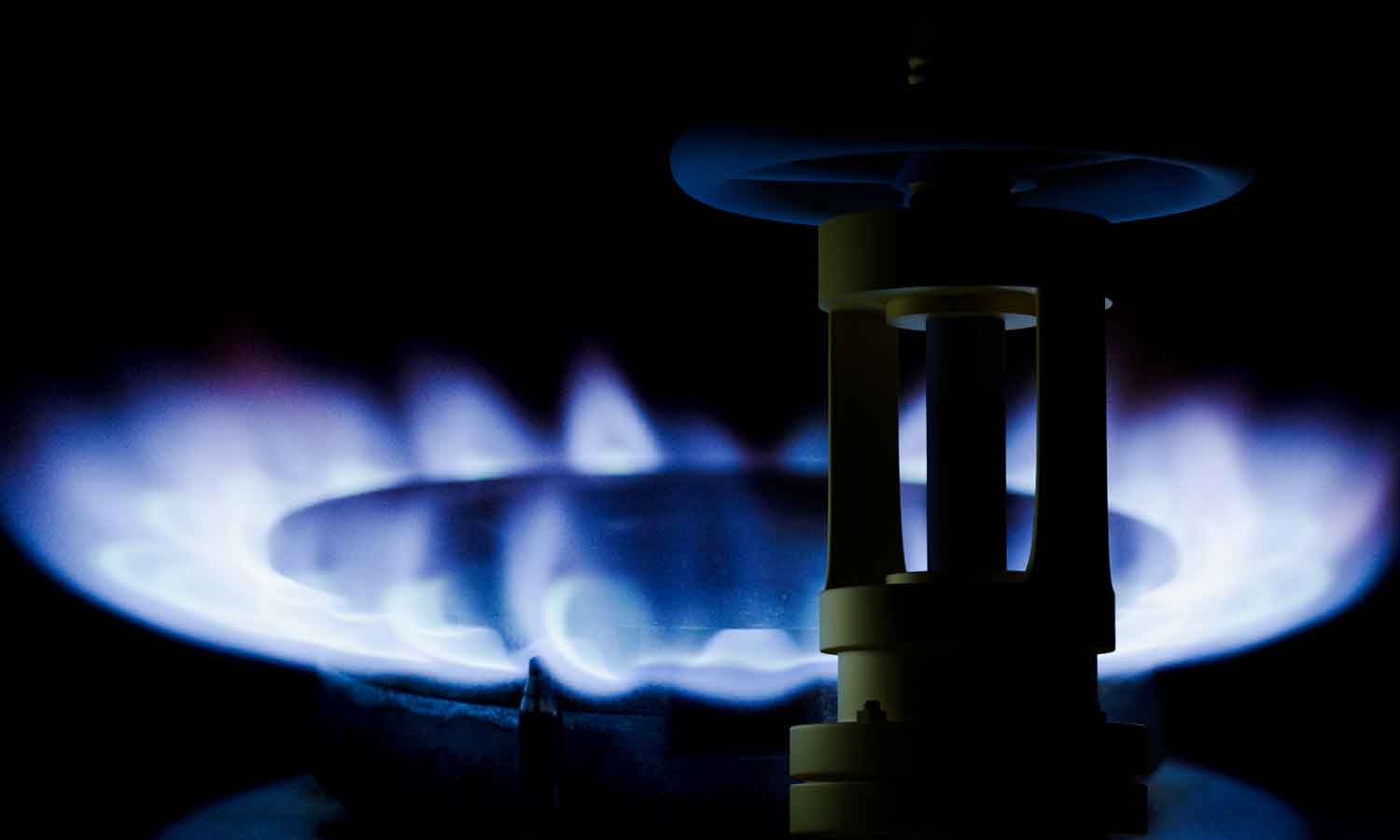
A few states have adopted limits or bans on new gas hookups in recent years, the results of which are being challenged in the courts.
The industry responded by getting fuel choice legislation passed in 27 other states, mostly in the south and west but including Maine, New Hampshire and Ohio, according to the American Gas Association, a distributor trade group.
Six states have removed ratepayer subsidies for new gas hookups, also known as line extension allowances.
Long-term natural gas usage is also threatened by net zero energy policies in Illinois, Massachusetts and other states.
Hookup Bans Challenged
Berkeley, California, adopted a ban in 2019 on new gas hookups, but it was overturned by the Ninth Circuit federal appeals court in 2024. The city then said it would settle with the California Restaurant Association and repeal the ordinance.
A net zero energy policy was adopted in Burlington, Vermont, in 2019, to eliminate fossil fuel use in all buildings by 2030. The city has implemented strict regulations that make new gas hookups difficult and costly, pushing new construction toward all-electric solutions.
Ten municipalities in Massachusetts participate in a pilot program created by the state Department of Energy Resources after an act by the legislature in 2022. To qualify, cities and towns adopt laws to require new building construction or major renovation projects to be fossil fuel-free. Analysis of the program is ongoing, and the department expects to receive energy data from utilities to populate its results.
The move toward gas bans began in Brookline in 2019, but its efforts were struck down by the Massachusetts Attorney General in 2020 because of conflicts with state building codes.
The Village Board of Oak Park, Illinois, enacted a ban on natural gas connections in 2023, with exceptions for commercial kitchens and backup power generators.
A bill was introduced in the Illinois general assembly this year to prohibit bans by localities on natural gas in new construction without a referendum, but did not advance.
A federal district court upheld an all-electric law of Montgomery County, Maryland, in March. Gas-powered appliances are prohibited in most new construction, allowing for the ban to proceed later this year.
Montgomery County is the most populous county in the state.
Another federal district court decision sided with the District of Columbia in March in a challenge to its Clean Energy Building Code Amendment Act.
The act requires certain new or substantially improved buildings to meet net-zero energy standards, precluding the use of natural gas appliances.
Law firm K&L Gates said that both courts rejected an argument, accepted in the Berkeley, California, case, that banning gas infrastructure effectively sets appliance energy use to zero and is preempted under the 1975 federal Energy Policy and Conservation Act.
“Maryland and D.C. courts joined a growing group of decisions concluding that … the act … does not prohibit state and local governments from regulating building energy sources, even where such regulations indirectly affect appliance choices,” the firm wrote to clients recently.
“This divergence among courts underscores the continuing uncertainty in this area and increases the likelihood of further appellate review,” K&L Gates said.
Construction groups in New York last year secured a suspension of a state law to ban gas hookups in any new construction of under seven stories, including homes, starting in 2026.
The federal second circuit heard oral arguments in January on this case and a companion case challenging a similar ordinance issued by New York City.
“The Second Circuit’s eventual decision may play a significant role in resolving the emerging split among courts,” K&L Gates said.
The National Association of Home builders and the New York State Builders Association said if their circuit court appeal fails, the next step would be to ask the U.S. Supreme Court to hear the case.
Hookup Subsidies in Retreat
A New York state law goes into effect later this year for new applicants for residential gas service to pay all of the material and installation costs. Currently, distributors are required to pay for the first 100 feet of a new gas connection. Critics said that cost was rolled into the rate base.
The office of Governor Kathy Hochul said the change will bring $600 million a year in financial relief. Environmental groups said the cost to ratepayers was $200 million per year in 2017-2021.
Massachusetts in late 2023 moved to largely eliminate natural gas line extension allowances, permitting them only to projects demonstrating no feasible non-gas alternative.
The state department of public utilities is imposing a new requirement that distributors evaluate whether non-gas alternatives are available that would make additional investment in gas infrastructure unnecessary.
The policy change is part of stated goals to encourage electrification rather than expanding gas infrastructure.
California, Colorado, Maryland and Oregon have removed similar ratepayer subsidies. Distributor NW Natural recently asked the Oregon Court of Appeals to reverse a hookup subsidy ban imposed by state utility regulators.
Broad State Policies Debate Gas
The outlook for gas is questioned in some states that have adopted net-zero energy goals, usually to go into effect around 2050.
Illinois in 2021 enacted a law requiring the state to decarbonize its electricity supply, which would phase out gas-fired power generation. The Illinois Commerce Commission has had a docket open for more than two years called the Future of Gas to evaluate the impacts of decarbonization and electrification goals on the gas industry.
A group of unions, environmentalists and other allied organizations submitted a proposal in the docket in January for all-electric new construction. A business coalition petitioned the commission in February to halt all workshops on the Future of Gas docket.
Massachusetts has a binding goal to reach net-zero greenhouse gas emissions by 2050, which includes a plan to phase out natural gas for heating and transition to electric alternatives, among other choices.
As of 2026, the state is curbing new gas pipe infrastructure, promoting electric heat pumps and requiring developers of new construction to avoid natural gas connections.
The state department of energy resources in April criticized the compliance plans of gas distributors to reach net zero. Rather than propose emission reductions, the department said that distributors continue to promote a hybrid heating pathway.
“The department is closely scrutinizing additional investment in the natural gas distribution system to minimize costs that may be stranded in the future as the Commonwealth scales up decarbonization measures,” a recent report said “To date, the local distribution companies’ primary strategy for reducing their Scope 1 emissions has been to replace leak-prone pipelines.”
Scope 1 emissions are direct greenhouse gasses released into the atmosphere from sources owned or controlled by an organization, according to the Greenhouse Gas Initiative. This is a non-binding but highly influential international effort for emissions management.
Natural gas accounts for half of regional electricity generation. Massachusetts still wants to eliminate that usage but is aware of its impact on consumer bills.
Three large wind power generation projects offshore New England are now in operation. Efforts by the administration of U.S. President Donald Trump to halt wind power construction have been overturned by federal judges.
Editor’s Picks

