
Feature Articles
Have a topic request or want to submit an article? Contact the MAGNIFYI Editors
Who Approves the Battery?
States are committing billions to energy storage. Local zoning, fire code, interconnection, and environmental review decide where it actually gets built.
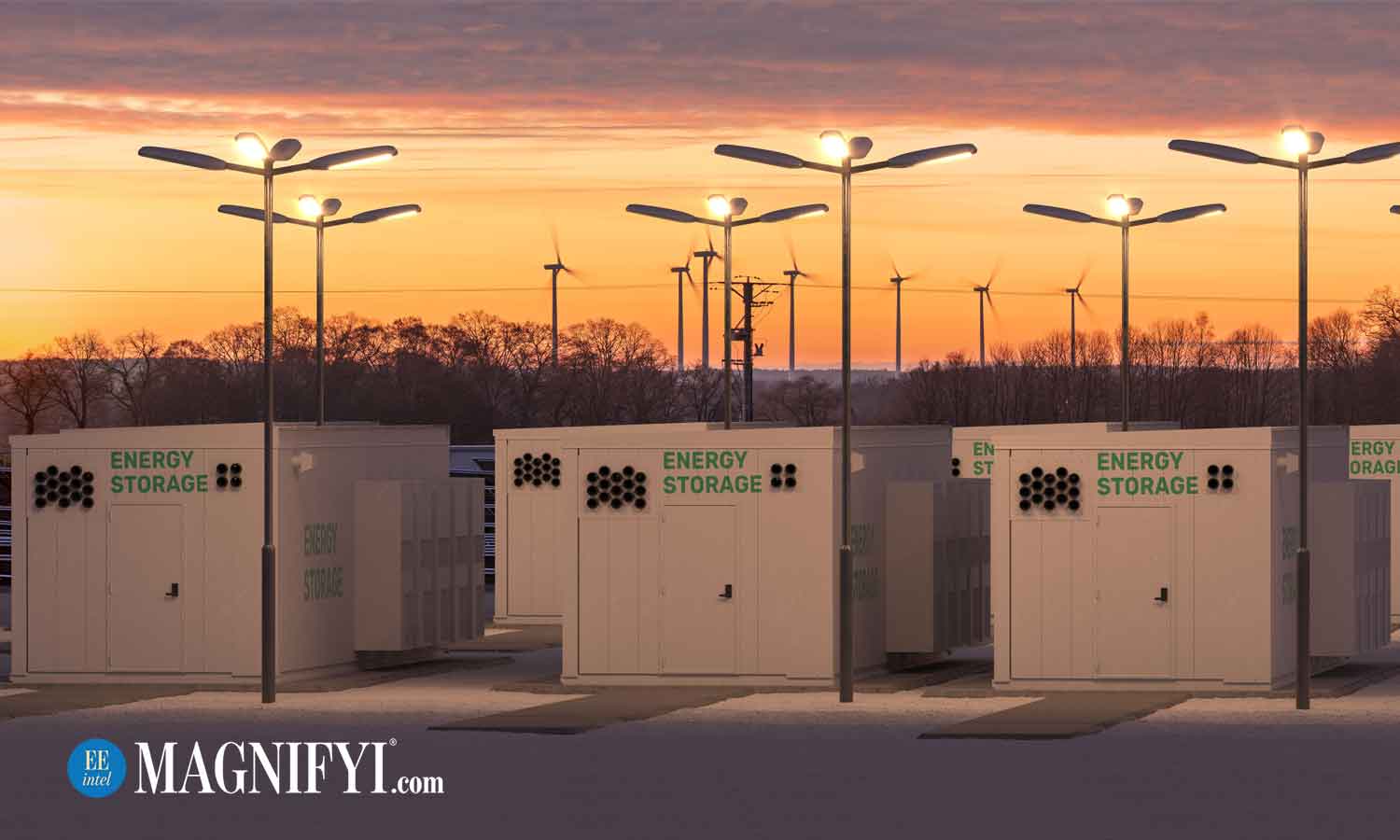
When a state sets a storage target and funds it, the policy story is easy to follow. Procurement goals are announced, incentive blocks open, and megawatts appear on a spreadsheet. New York’s push toward six gigawatts is a good example of how much design work goes into these programs.
But an incentive tells a developer what a project is worth. It says nothing about whether the project can be built. Between the two sits a layer of local decision-making that no state program is designed to reach, and that layer is where storage capacity gets delayed, redesigned, or lost.
Four gates, four decision-makers
A battery storage project typically has to clear four separate gates. Each is controlled by a different body with different incentives and a different calendar.
Zoning and land use. Storage is still a new land use in most local codes. Many ordinances never contemplated it, so reviewers borrow standards written for solar farms or substations. Whether a project needs a conditional use permit, a special use permit, or only a building permit varies by town, and that choice determines whether a public hearing is required. Discretionary approval, where a board can say no, is a very different risk from ministerial approval, where staff must approve a compliant application.
Fire code. Most jurisdictions look to NFPA 855 and the International Fire Code for spacing, suppression, and emergency response requirements, but adoption is uneven. The edition in force differs from place to place, and local fire officials have real discretion in applying it. Expect questions about unit-level fire test data, hazard mitigation analysis, and whether the local department has the training and equipment to respond. A requirement that surfaces late in review can force a site redesign.
Interconnection. The grid runs its own queue, study process, and timeline, set by the utility or system operator and unrelated to the town’s calendar. A project can win local approval and then wait years on studies, or the reverse. Changes to size or configuration can trigger re-study, so a fix for one gate can reopen another.
Environmental review. Wetlands, habitat, stormwater, cultural resources, and in some states a formal environmental impact process each add requirements and timelines. These are often the least visible to people outside development and the hardest to compress.
No incentive program carries a developer through all four, and nobody coordinates the gates with one another.
The moratorium problem
The sharpest version of this gap is the local moratorium. When a town or county pauses storage applications while it writes new rules, the pause can run for months and is often extended. Some respond to a specific concern, such as fire safety after a widely reported incident elsewhere. Others come from simple unfamiliarity with the technology.
The scale is larger than most market observers assume. Our firm tracks and verifies local battery storage restrictions, and our database currently holds 175 verified entries across 16 states. 113 are classified as active. New York accounts for 128 of the 175, and 90 of those are active. At least 15 New York measures took effect in the first half of 2026 alone, and several in the dataset have been in place for more than two years.
Moratoriums do end. Of the 128 New York entries, 30 have been lifted or have expired. But the pattern is a patchwork of overlapping local pauses, each with its own start date, scope, and conditions for lifting. They are enacted in town board meetings and planning commission agendas, not in the energy press, which is why a project that looks well supported on paper can stall in a jurisdiction few outside the development world have checked.
Why this matters beyond developers
It is tempting to treat siting friction as a developer’s problem. It is a market problem for three reasons.
Capacity assumptions depend on it. Forecasts that count announced storage as available storage implicitly assume permitting success. When projects slip, supply and procurement planning slips with them.
Cost follows delay. Every month a project spends in review carries financing, land, and equipment-pricing exposure. Those costs end up in the economics of the products customers eventually buy.
Compliance exposure moves downstream. Counterparties and their counsel increasingly ask whether the underlying assets have clean permits, valid approvals, and defensible fire and environmental compliance. A project built under a loosely documented approval becomes a diligence problem later.
What a better approach looks like
The fix is not another incentive. A few practical changes would narrow the gap:
- Treat permitting risk as its own risk category. Programs that award incentives could weigh siting readiness, such as site control, early engagement with the local permitting authority, and a defined fire-code pathway, alongside price.
- Standardize where possible. Model ordinances and clear guidance on fire-code adoption reduce the number of times a town has to learn the technology from scratch.
- Engage early and locally. Projects fare better when developers meet the planning, fire, and building offices before a formal application, and when communities hear about a project from the applicant rather than from a hearing notice.
- Track the patchwork. Moratoriums and ordinance amendments move quickly. Anyone relying on storage capacity should know which jurisdictions are paused, which are rewriting their codes, and which have a settled process.
The takeaway
Storage incentives answer the question “is this project worth building?” Local permitting answers a different one: “can it be built here, and how soon?” Until the two are looked at together, the gap between announced storage and operating storage will keep surprising people who assumed the first number was the second.
——————————————————–
About the author: Malaquias Encarnacion is Managing Director of Carina Energy, a development and permitting advisory firm for utility-scale battery energy storage. He has nearly 20 years of experience in energy storage, including prior roles at AES Energy Storage/Fluence, EDF Renewables, Leeward Renewable Energy, Alliant Energy, PJM, and Qcells. Learn more at carina.energy.

